Wall Logic Puzzle: Graphics for KDP Interiors
First Impression: Clean, Calming, and Quietly Confident
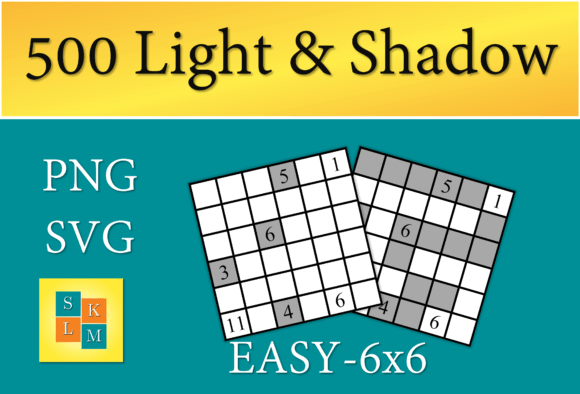
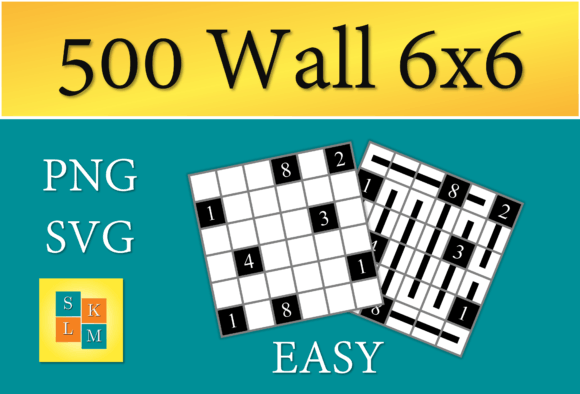
When I opened the Wall Logic Puzzle files, my designer eye immediately registered clarity—not flashiness. These aren’t loud, trend-chasing graphics. They’re 6x6 grid logic puzzles rendered with crisp lines, balanced negative space, and consistent stroke weight. The mood is calm but purposeful—ideal for brands that want to signal intelligence, mindfulness, or thoughtful engagement without shouting. For a small business launching a wellness journal, a digital course on focus skills, or a seasonal “slow living” campaign, Wall Logic Puzzle delivers a subtle yet distinctive visual tone: approachable precision.
How It Fits Real Marketing Workflows
Last month, I helped a client—a yoga instructor turned online coach—refresh her content kit for a new “Mindful Mondays” email series. She needed printable reflection pages, Instagram carousels with gentle interactivity, and Pinterest pins that stood out in crowded feeds. Wall Logic Puzzle became the quiet anchor across all three: embedded as a subtle background texture in Canva templates, scaled down as a decorative corner element on PDF worksheets, and featured as a “solve this before your meditation” teaser in Stories. Because each puzzle is easy-level and grid-based, it invites participation without friction—perfect for audiences who scroll fast but pause for moments of light mental play.
Where Wall Logic Puzzle Strengthens Brand Communication
- Visual consistency: With 500 unique puzzles, you can rotate variants across social posts or email banners while maintaining identical line weight, spacing, and proportion—no jarring shifts in tone.
- Audience trust: Clean, well-structured logic puzzles subconsciously signal competence and attention to detail—valuable for coaches, educators, and creators building authority.
- Professional appearance: Unlike generic clipart or overused SVG design, Wall Logic Puzzle feels intentional. It reads as commercial design, not stock filler.
- Emotional connection: The gentle challenge taps into curiosity and accomplishment—emotions that boost engagement and sharing, especially in lifestyle, education, and self-development niches.
Top 7 Marketing Uses That Just Work
- Social media graphics: Layered behind soft typography on Instagram posts or used as animated transitions in Reels (with proper export).
- Pinterest pins: Scaled to 1000×1500px with minimal overlay text—these puzzles add visual rhythm without competing with headlines.
- Lead magnets: As interactive elements inside free downloadable checklists or habit trackers (e.g., “Solve one puzzle to unlock Week 2”).
- Branded templates: Built into Canva templates for clients or customers—adds perceived value without increasing production time.
- Digital product visuals: Used as background textures on mockups for planners, Notion templates, or digital journals sold on Etsy or Gumroad.
- Editorial design: As decorative dividers or section breaks in blog posts, newsletters, or media kits—especially effective when paired with serif fonts for contrast.
- Printable promotions: Included in holiday bundles, launch kits, or subscriber-only printables—low ink usage, high perceived craftsmanship.
Where to Use Wall Logic Puzzle With Intention (Not Assumption)
It shines brightest when supporting—not starring. Avoid placing Wall Logic Puzzle front-and-center in formal corporate branding, dense infographics, or mobile-first ads under 300px wide. Its strength lies in balance: it works beautifully beside clean sans serif fonts (like Inter or Montserrat), adds warmth next to handwritten accents, and grounds display fonts without overwhelming them. But test it carefully against script fonts—it can clash if stroke weights misalign. Also, preview how it renders in black-and-white: some versions lose subtlety when converted to grayscale, so always verify contrast for accessibility and print use.
Brand Designer Notes You’ll Actually Use
- Test with your palette: Drop one puzzle into your brand color library—see how it reads over primary, secondary, and neutral backgrounds.
- Mock it up: Place Wall Logic Puzzle inside real campaign assets—email headers, Instagram story frames, packaging mockups—before finalizing layouts.
- Check responsiveness: Zoom to 25% in your design tool. Does the grid remain legible? If not, reserve it for larger-format uses only.
- Compare contextually: Pull up top-performing competitor visuals in your niche. Does Wall Logic Puzzle feel distinct yet aligned—or does it blend in too much?
- Verify licensing: Confirm the commercial license covers client work, paid ads, and digital product resale—especially important for KDP Interiors and other creative marketplace integrations.
Why This Is More Than Just Another Graphic Design Asset
Most graphic design assets are either decorative or functional—but rarely both. Wall Logic Puzzle bridges that gap. It’s a printable design that doubles as an engagement tool, a digital product component that supports content marketing strategy, and a modern design element that elevates small business branding without demanding custom illustration budgets. For bloggers building audience loyalty, publishers curating KDP puzzle books, or designers crafting cohesive visual systems, it’s a rare find: versatile, licensed, and quietly sophisticated. It doesn’t scream “look at me”—it whispers “you belong here,” which, in today’s noisy feed-driven world, might be the strongest branding statement of all.