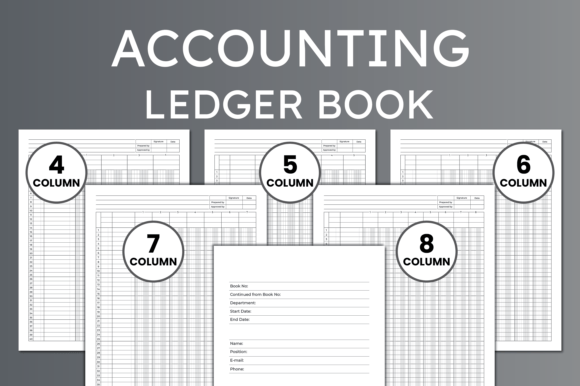
Accounting Ledger Book KDP Interior
A Designer’s First Glance: Clean, Calm, and Quietly Confident
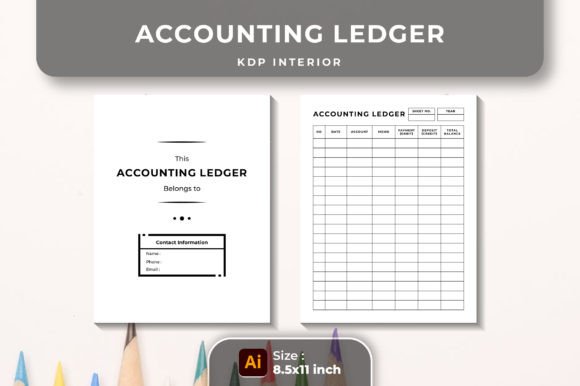
When I opened Accounting Ledger Book KDP Interior for the first time, I didn’t see flashy graphics or forced whimsy—I saw quiet intention. The layout feels grounded: ruled lines, subtle column headers, a soft serif font for labels, and generous white space around key elements like “Date,” “Description,” and “Balance.” It doesn’t shout “accountant!”—it whispers “organized, thoughtful, trustworthy.” That tone matters deeply when you’re stitching it onto a handmade tote for a small business owner or embroidering it on a linen tea towel for a bookish holiday gift.
Real-World Use Case: A Custom Embroidered Tote for a Local Bookkeeper
Last week, I prepped a client project—a limited-run set of cotton canvas totes for a solo bookkeeping service launching her brand. She wanted something professional but warm, functional but not sterile. Accounting Ledger Book KDP Interior landed perfectly: minimal enough for clean embroidery, detailed enough to read at a glance, and thematic without being cliché (no cartoon calculators or dollar signs here). I stitched it in charcoal gray thread on oat-colored canvas—no fill stitch overload, no tiny unreadable numbers. Just crisp running and satin stitches outlining the ledger frame and light fill for header bars. Customers noticed it immediately—not as “cute,” but as *intentional*.
Where It Shines in Embroidery Projects
- Custom apparel: Works beautifully on sweatshirt cuffs, pocket flaps, or chest placements—especially when scaled to 3–4 inches wide. The balanced proportions hold up even with slight fabric stretch.
- Tote bag design & aprons: Its horizontal orientation and clear visual hierarchy make it ideal for front-panel placement on structured fabrics.
- Personalized gifts: Paired with a monogram or small date below, it becomes a meaningful keepsake for graduates entering finance, new small business owners, or retiring CPAs.
- Boutique branding & small shop product: As a digital embroidery file, it supports cohesive collections—think matching ledger-themed pillow covers, kitchen towels, and notebook sleeves—all unified by that same calm typographic rhythm.
- Printable mockups & digital product previews: Because the interior is clean and scalable, it translates well into lifestyle mockups for Etsy listings—no busy backgrounds needed to sell the vibe.
Where to Proceed With Care
This isn’t a one-size-fits-all embroidery file—and that’s honest, not limiting. Here’s where attention pays off:
- Small hoop sizes (under 4”): The column dividers and fine ruled lines may compress or blur if shrunk too far. Test at your intended size before hooping production fabric.
- Textured or napped fabrics: On terry cloth towels or fleece-lined caps, those light fill areas can disappear. Boost contrast with slightly heavier satin stitch or add a narrow outline.
- Thin or stretchy fabric: Like lightweight tees or baby onesies—use cutaway stabilizer underneath and consider simplifying interior line weight if needed for clarity.
- Dark fabric: The subtle shading in some KDP Interiors files can mute on black or navy. Check how the grayscale version reads before finalizing thread colors.
- Curved surfaces (caps, mugs, curved pillow seams): The straight-edge ledger frame holds up better than ornate borders—but always test on a curved scrap first.
What It Adds to Your Finished Product
Accounting Ledger Book KDP Interior elevates perception—not just aesthetics. When stitched cleanly, it signals care, precision, and quiet expertise. That builds customer trust faster than any tagline. For an Etsy seller, it transforms a basic tote into a “thoughtful small business tool.” For a craft fair vendor, it adds narrative weight to a handmade kitchen towel—“the kind you’d actually use to balance your books.” And for a designer building brand assets, its consistent spacing and restrained detail support long-term cohesion across embroidered patches, digital printables, and social media visuals.
Practical Notes from the Hoop
- Always test on scrap fabric first—especially if using textured weaves or blending thread colors.
- Review stitch density: Light fill areas should be open enough to avoid puckering on stable cottons but dense enough to read on linen blends.
- Confirm hoop size compatibility before digitizing or scaling—some versions may extend beyond standard 5x7 boundaries.
- Inspect small details: Are column headers legible at your target size? Does the “Total” bar stand out clearly?
- Test in black-and-white mockups to assess contrast and hierarchy without color distraction.
- Compare light and dark fabric backgrounds—what reads on ivory canvas may vanish on charcoal twill.
- Use proper stabilizer: Medium-weight cutaway for most apparel; tear-away for stable home décor items.
- Check licensing terms before selling finished embroidered goods or bundling this as part of a commercial embroidery kit—KDP Interiors files vary in usage rights.
Final Thought: A Design That Earns Its Place
Not every machine embroidery design earns repeat use. Accounting Ledger Book KDP Interior does—because it respects both the craft and the context. It doesn’t try to be everything. It’s not playful, nor is it overly technical. It’s simply clear, calm, and capable. Whether you’re stitching it on a baby’s milestone blanket (“First Ledger, Age 3 Months”) or branding a boutique’s wholesale apron line, it carries weight without heaviness. That’s rare. And for designers, makers, and small shop owners who value substance over sparkle—that’s exactly the kind of embroidery file worth keeping in rotation.